
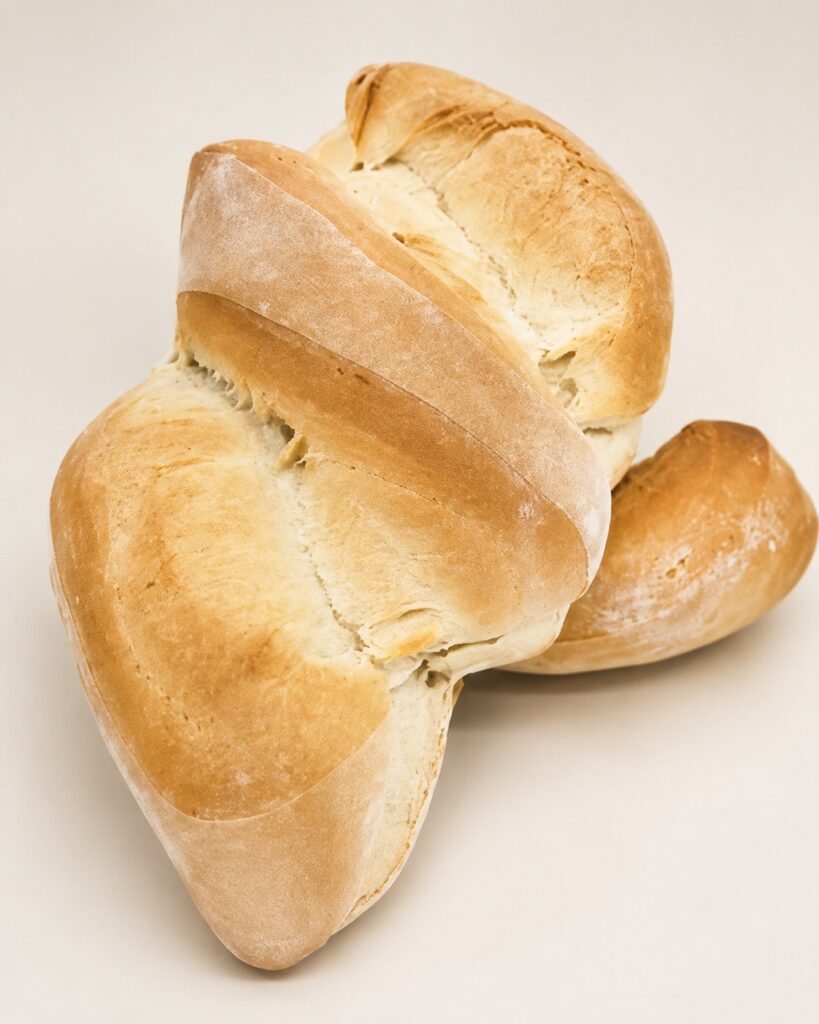
If artisan bread comes into your house, sooner or later it will happen to you: There is a piece of yesterday's loaf left and you don't know whether to toast it, save it or give up. Good news: In Córdoba we have been solving that dilemma for centuries, and the most famous answer is to eat it cold and with a drizzle of olive oil.. In this article we tell you what to do with stale bread so that not a single crumb ends up in the trash., with ideas designed for summer and for the long-fermented bread that we make in our bakery.
Yesterday's bread is not bad bread
It is worth clarifying it from the beginning: a sourdough bread with long fermentation does not “expires” the next day. Evolve. The crust loses some of the crunch, the crumb settles and the flavors concentrate. In fact, There are uses in cooking where day-old bread works better than freshly baked bread., because it absorbs less like crazy and cuts more cleanly.
Another thing is industrial bread, that goes from tender to inedible in hours. Bread with skill endures and transforms. That's why, before thinking about recipes, it is worth keeping well: We will tell you in detail in why you shouldn't put bread in the refrigerator. Quick summary: cotton cloth or cloth bag, away from the cold of the refrigerator, that dries out the crumb and accelerates aging.
The most Cordoban destination for yesterday's bread: the salmorejo
If there is a recipe that explains why in Córdoba there has never been any leftover bread, is the salmorejo. Tomato, pan, extra virgin olive oil, garlic and salt. Nothing else. Bread is not an addition: It is the base that gives body, the difference between a fine cream and a watery gazpacho.
And here yesterday's bread plays with an advantage. The crumb settled from the previous day is hydrated evenly and binds better when crushed, giving that dense and silky texture that anyone who has eaten a good salmorejo recognizes.. With fresh bread of the day, the cream tends to be looser.
What bread to use for salmorejo
Cordoban tradition mandates bread with dense, brown crumbs.. And there the Córdoba telera rules: a sweet bread, of Castilian tradition, whose brown crumb is responsible for the texture of the most typical dish of Córdoba. It is no coincidence that our name comes from this traditional bread.: we tell you in Three rows: the name that is born from bread. If you don't have a telera on hand, a loaf of sourdough from the previous day or a loaf of bread works wonderfully.
A workshop trick: remove the thicker crust if you are looking for a very fine texture, and soak the crumb in the crushed tomato itself, not in water. The bread must absorb flavor, don't dilute it.
More ideas to take advantage of stale bread in summer
Croutons for gazpachos and salads
Cut the bread into cubes, a drizzle of olive oil, oven or pan until golden brown, and you will have croutons with more flavor than any industrial bag. About a gazpacho, a cold cream or a salad with cheese, change the plate.
Homemade breadcrumbs
When the bread is completely dry, grate or grind it and store it in an airtight jar. The breadcrumbs of real bread, with its toasted crust, gives breaded and gratin dishes a flavor that cannot be compared to packaged ones.
Cold toasts for hot nights
Day-old slices, a blast of toaster, and on top of that what the season asks for: grated tomato with oil and salt, fresh cheese, smoked sardine, or just a good extra virgin olive oil. yesterday's slice, firmer, holds topping without bending.
Cousins of salmorejo: porra and white garlic
The salmorejo is not alone. The antequerana porra follows the same logic with an even denser texture, and white garlic—almond, SHE, pan, oil and vinegar—is probably the oldest cold soup in Andalusia. All three share the same secret: without a firm crumb bread, there is no cream that holds. If you have half a loaf left over this week, you already have three different recipes before repeating.
Torrijas and crumbs, for those who look at winter
Not everything is summer. Set bread is the historical base of migas and torrijas precisely because a firm crumb absorbs milk or broth without falling apart.. If you have leftover bread now, cut it into slices and freeze it well wrapped: It will be your reserve for those recipes when it gets cold.
And if you still have left over: freeze, but freezes well
The freezer, unlike the refrigerator, yes he is a friend of bread. The key is how. Freeze the bread already cut into slices, well wrapped so that it does not catch frost, and the same day of purchase or the next, not when it's already dry. to get it back, straight from the freezer to the toaster or a few minutes to the oven: the crust crunches again and the crumb regains its point. Freeze the whole loaf, instead, requires defrosting completely and usually ends in rubbery bread.
Taking advantage of bread is part of the job
In the workshop we work with long fermentations and without shortcuts, and that same logic of respect applies to what comes out of the oven: a bread that has taken time to make deserves a second life in the kitchen, not a trash can. Taking advantage of yesterday's bread is not a trend “zero waste”: It is what has always been done in houses where bread was something serious.
Start with good bread
Everything above has a condition: that the bread is worth it. A sourdough bread, well fermented and well baked, it's good today, useful tomorrow and usable all week. If you want to check it, stop by any of our stores in Córdoba and take a loaf: today for the table, tomorrow for the salmorejo. And if you hesitate between breads, here is a quick guide to what bread to choose according to your meal.