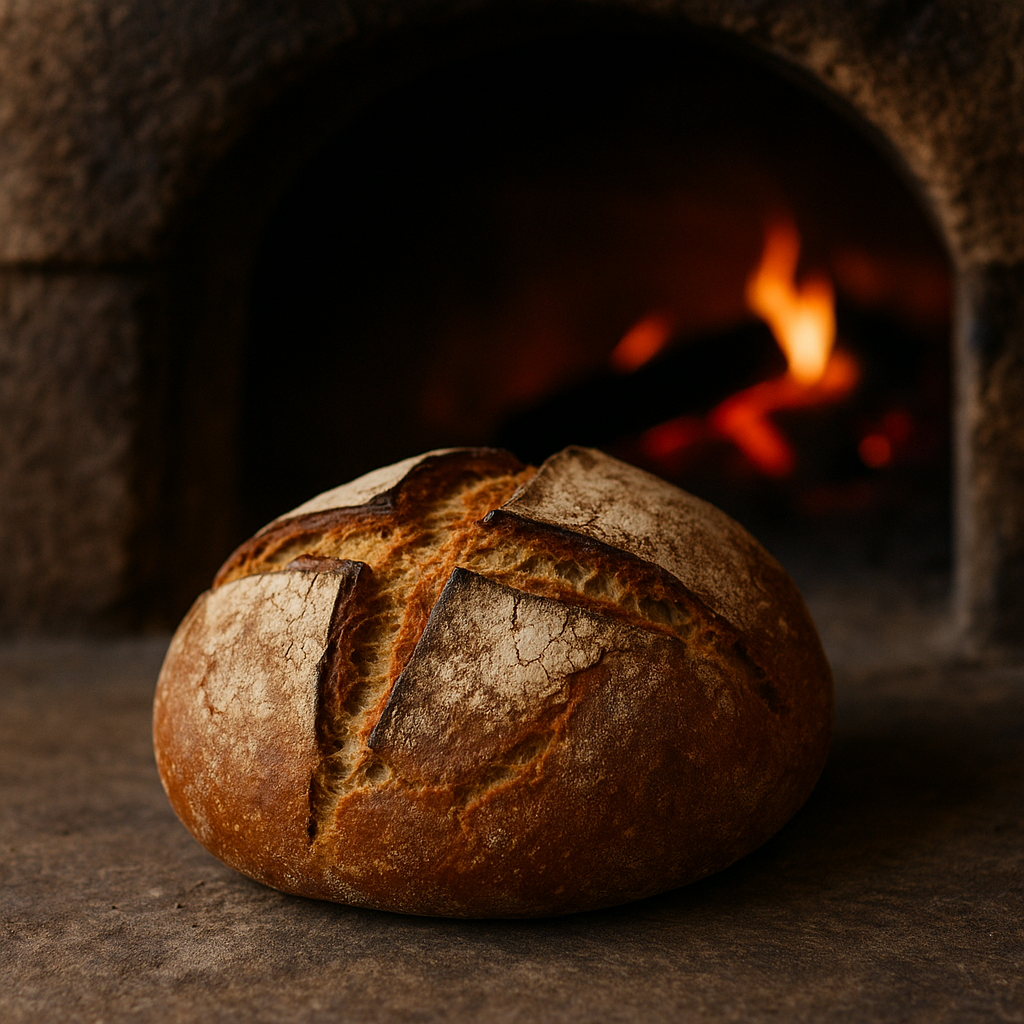
A direct look at bread from more than 500 years in Córdoba: ingredients, social classes, techniques and an experimental recreation with an oven, firewood and living crumb. Because history is also eaten.
The Bread of Córdoba in 1490: Tradition, Survival and Fire
In Córdoba at the end of the 15th century, the bread was not an accompaniment. It was the center. Food, symbol and social scale. What we call today a loaf, whole wheat cake or bread, then they were working, adutaques y afrechos. Each cut of dough spoke of the status of the person who ate it..
The reflection of bread: classes and customs
The nobles accessed the white bread: wheat flour sifted three times, without bran, kneaded with natural barley yeast. The servants, hopefully, they received bread with bran. The poor survived with what was left, sometimes mixed with avena, einkorn o barley. More than a recipe: It was a survival strategy..
15th century baking: machine-free technique
The process was slow. Intense. Three or four phases of kneading in wooden trough. Fermentation temperature monitored, humidity and experience. And an oven lit at 4 of the morning. Without thermometer, without stopwatch. Just intuition, punch and fire.
Types of bread: beyond the everyday
- Ritual bread: redondo, alto, with excess yeast. Offering and symbol.
- sponge cake bread: cooked twice, without yeast. Designed for soldiers and travelers.
- pan muslim: cereal mix, elongated shape, diagonal cuts. Baked Andalusian diversity.
From history to the oven: experimental recreation
The most interesting part? We have recreated it. With stone ground flour. With live ferments grown from scratch. and with your hands. As it was done more than 500 years. Because the story is not in the books. It's in the crumb.
Research developed by the University of Córdoba together with Hermanos Fernández bakery and the Meridies HUM-128 group.